Sunday, November 7, 2010

Union Square Farmer's Market


New York City has a little hidden secret (or perhaps a secret to some) that occurs 3-4 times a week in Union Square. Beginning in 1976 with just a few farmers looking to showcase their fresh harvest, it has now grown into a mecca for those seeking the highest quality and variety of vegetables. Danny Meyer selected his location for Union Square Cafe back in the 80's because of its proximity to the market.


I visited this past Wednesday as I had a day off. Even though I visited near closing time, there was still hundreds of people roaming the market and plenty of great produce available for sale. With a $1 cup of hot apple cider in my hand, I explored the market, learning new vegetables and seeing what it's in season.


The 2 acre area hosts over 140 producers each week! Each purveyor comes from the tri-state area, some of them driving hours just to showcase their produce. The farmers are very eager to share their growing practices and give you advice on how to cook their produce.


Not only is the variety of produce mind boggling--the prices are incredibly cheap as well (compared to supermarkets). Even local chefs have been known to visit the market in the mornings to select the best pieces to feature on their menus.


Everything they provide is organic and fresh. 
The offerings change according to the season--tomatoes in the summer, apples and gourds in the fall, etc. If it's not in season, you won't find it here.


If you're ever in New York, I encourage you to stop by. And if you live in New York, it's a great place to shop for your weekly groceries and be inspired to cook with the seasons. If you're interested in learning more about it, visit their website.

Thursday, September 2, 2010

On matching food and wine...

If you were able to read some of the first blog posts, you may remember a promise I made to talk about how to pair food and wine. So now that you're able to properly evaluate wine, it's time to put your skills to proper use. In fact, if you read nothing else but this opening paragraph, read this--drink your wine with food! If you're still with me, you're about to go from zero to hero at the dinner table as you impress your date by seamlessly ordering the perfect wine to match your food--no sommelier needed.


Wine is a beverage that is ideally meant to be drank with food. In Europe and South America, wine is drunk at lunch and dinner almost daily. Even young kids grow up drinking wine at the dinner table. The United States mostly does it backwards. We drink wine on its own for happy hour. As a result, we like "fruity" and "sweet" wines with lots of sugar. After all, we grew up drinking coca-cola. Manufacturers know this, and pump sugar into their smiley-faced labeled pink bottles for unsuspecting buyers walking down the grocery aisle. When a wine is strong or has some tannin, we don't like it, and instead spring for the fruity white zinfandel. Consequently we miss out on good, strong wines that were actually crafted to be drank with food, not at happy hour! Do you actually think you're going to get a decent wine at a 2-for-1 special? If you just want to get drunk, then save your time and money and have a couple of shots of this instead:
Does this mean the wine cops will come after you for drinking wine at a party or happy hour without some food? Absolutely not. You just need to be smart about what you drink. For example, if you're just having hors d'oeuvres, do not drink the big red cabernet sitting on the table. Its strong tannins will punch you in the face, destroy your palate, and make the wine taste horrendous. You'll think your friend is cheap and hates you for bringing over such a poor wine. Had you been smart, opened the wine an hour prior to let the alcohol evaporate, and drank it with the grilled meats later in the evening, you'd thank your friend for the excellent wine he brought to the party.


So let's get started, shall we? I'll begin with the bare bones basics and do a quick drill with some visual aids:
REAL RED Zinfandel
FAKE Zinfandel


     Repeat After Me


No comment necessary...
YES


The girl you marry
The girl you don't call back


Deeeelicious!
Over the counter boxed urine


Congratulations, you've passed the first level! You're well on your way to becoming a stud. Now that you have the basics down, we'll get to the nitty gritty...


On Complexity:
Professionals suggest that there can only be one star at the table--either the food or the wine. In other words, if you have an extremely elaborate and complex dish, you should have a simpler wine to allow the food to shine. If you have simple food, order a complex wine. I agree with this logic. However, if I was enjoying great food, I'd like some great wine to go along with it, as well. I like taking things to the extreme. Experiment on your own and have fun with this one.


On Acid Levels:
Acid is incredibly important in matching food and wine as it helps to cleanse your palate when you eat foods that are high in fat, cream, sugar, butter, and salt. For example, high acid wines go well with rich, buttery lobster because they cleanse your palate between bites. Without the wine, you'd grow tired of the lobster quickly and the buttery taste would linger in your mouth.


Acid in wine also provides balance to dishes themselves high in acid, such as tomatoes or ceviche. Without it, the tomatoes or ceviche would feel too acidic.


High Tannin Wines:
Tannin, if you remember, is that thing in red wine that dries your gums and tongue. Highly tannic wines should ideally be matched with dishes high in fat and protein--such as steaks--because the tannin binds to the protein and fats. Upon binding, the tannin actually solidifies and you end up swallowing it. As a result, with the bitter tannins out of the way, the wine becomes much smoother in the mouth. In addition, due to its bitterness, tannic wines go well with charred or grilled foods.


Tannin is one of the major things to consider when pairing food and wine. A highly tannic wine will have a similar effect to a high alcohol wine--it will destroy your palate and the subtle flavors of the light food. So, don't drink a cabernet with a light fish dish.


If anywhere else, this is where the maxim of "drink white wine with white foods and red wines with red foods" makes the most sense.


On Sweetness Levels:
When thinking of sweet foods (particularly desserts), the wine you drink must be at least as sweet--if not sweeter--than the food you're eating. So for example, if you're having chocolate cake, drink a port. Remember, as I mentioned in the earlier post about wine, when I say sweet I mean dessert wine. Not "fruity."


Sugar can also act as a foil to spicy and salty foods. So, spicy curry with an off-dry Gewurztraminer is a great match.


On Saltiness Levels:
If a food is overly salty and you would like to reduce the perception of the salt, choose a wine high in acid or high sugar (or both).


On Alcohol Levels:
You don't let a sumo wrestler into the ring with a high school wrestler, do you? It'd be unfair for the skinny kid. Therefore, have light wines with light food and heavy wines with heavy food. The weight of the high alcohol will squash the subtle flavors in a light dish. In fact, some serious foodies will not drink hard liquor when having an expensive meal because the alcohol deadens the palate and flavors are lost.


Another factor to consider is that spicy foods will accentuate the alcohol in wine. Therefore, when eating spicy foods, drink wines low in alcohol. Opt instead for wines with some sugar, such as a Riesling or Gewurztraminer.

On Intensity Levels:
Despite the above statement about alcohol, there is one exception. If you have an intensely aromatic or flavored wine, the intensity can act as a substitute for the alcohol. So, for example, you can have an intense white riesling with roasted duck.


On Fruits, Smells, and Tastes:
All other factors considered first, when choosing between two wines that will equally pair well with a dish, I will opt for the wine whose own flavors will be able to match the flavors of the food. For example, if your dessert is a pecan pie, you know you need a sweet wine (due to the rules of sweetness listed above). But, there are countless dessert wines out there. Which should you choose? I would go for a Sherry or a Madeira, as these are sweet wines with nutty flavors that will blend well with the pecans in the pie. Likewise, as in the chocolate cake example, a port would go well because it can sometimes have undertones of chocolate. A grassy sauvignon blanc would go well with a seafood dish featuring cilantro or herbs. The pairings are endless!

On Pinot Noir:
Pinot Noir is a particularly flexible wine that I really find enjoyable and sometimes make it my go to wine when making recommendations. The main reason is that for me, Pinot Noir straddles the line between the characteristics shared by both whites and reds. It is one of the only reds I would consider pairing with light dishes--such as fish--yet you can still drink it with red meats. This is due to its low tannin and alcohol levels. It can be so smooth that it will not overpower a light dish.


I would often recommend this when I had people at a table ordering different things. One person wanted fish, and the other wanted a steak. However, one of them would insist on drinking red. I would turn to Pinot Noir--the fish wouldn't be overpowered and the steak eater would still get his red.

On "Buttery" Chardonnays:
Chardonnay is an unaromatic grape variety that is often aged in oak barrels in order to give it some body, color, flavor, and aroma. The aromas and flavors imparted are that of a buttery, dairy smell. The color becomes more golden yellow. (By the way, this is the same thing done to whiskeys and other liquors aged in barrels--to give them color and taste).


The more aging done to the Chardonnay, the more of this buttery aroma it will have. In addition, it will also have more alcohol, and feel heavier to drink.


Not all Chardonnays have the same level of barrel aging. Typically anything from France will be light, whereas "New World" wines will have more barrel aging. I urge you to go out and taste some buttery Chardonnays and some light wines to see which you prefer. As with all things wine related, each style will have its own application when it comes to pairing. A buttery Chardonnay may go great with a pasta or lobster dish, whereas a lighter Chardonnay may go great with a fresh salad.


On Regional Pairings:
If all else fails and you're left scratching your head for a minute when trying to pair wines, there is an almost foolproof maxim that you can turn to and still get by safely with: If it grows together, it goes together.  In other words, pair wine and food from the same region together. Spanish wines will always match well with Spanish food; French food and wine are a match made in heaven; Italian food and wine; South America...etc! You can almost never lose with this philosophy.

Thanks for reading! I hope you enjoyed it, learned something new, and go drink some wine! But remember.....
I don't always drink wine, but when I do, I drink it with food. Stay thirsty, my friends.

Tuesday, August 17, 2010

Restaurant Week NYC

Twice a year (Summer and Winter), Manhattan restaurants participate in an event called Restaurant Week. It's a span of anywhere between 2-6 weeks where some of the upscale places in town offer a 3 course lunch or dinner for a reduced price of $24 or $35, respectively. This is a monster bargain, as many of these places would normally cost 2-3 times that price for a 3 course meal. However, you have to be careful what you wish for, as some restaurants will offer you a great meal, whereas others will throw scraps onto the menu and pretend it's fine dining.

Due to my moving up here recently and being occupied with more important things (such as finding an apartment!), I didn't have the time to explore as many places as I wanted. Fortunately though, I was able to check out two places: David Burke Townhouse and Le Cirque. 
David Burke Townhouse came first. It was off a friend's recommendation on a Sunday evening. It's a very modern, chic looking place in the Upper East Side and received a 2-Star NY Times rating several years ago. The chef/owner, David Burke, is a bit cooky. Many of his plates have eccentric names and presentations. But whereas many other chefs with an air for the flair fail with the execution of the food, he makes it work pretty well. Service was pretty good, but what surprised me was the food and the immense portions we got considering it was restaurant week. Sure, a few details were missed (unpolished fork, Riedel etching on the wine glass pointing the other way), but these are details only a perfectionist would look for, especially when you work in an environment where perfection is demanded every day. They were easy to overlook considering the great meal we had.
Albert, who first made an appearance in a previous pizza episode, and I sat down in the lounge and were treated to a great meal. For starters, he enjoyed a Pretzel Crusted Crab Cake with a Sweet Chili Prawn, Confit Orange and Poppyseed Honey. Due to my shellfish allergy, I didn't want to risk anything so I didn't try it, though he enjoyed it immensely. I opted for something simpler--a Wedge Salad with Bacon Lardoons and Russian Dressing (it also had crawfish which I had removed). It was very well presented and tasted great. 
Pretzel Crusted Crab Cake with Sweet Chili Prawn
Our entrees took it up a whole notch, as Emeril would say. Albert enjoyed a "Bronx Style" Filet Mignon of Veal and Veal Cheeks with Pea Puree, Pea Shoots, and Pistachio "Candy." This was one of the most flavorful and tenderest steaks I've ever tried. The veal cheeks served on the side literally melted in my mouth. I've never seen meat so soft. The "Bronx Style" is a new cut of meat that supposedly Burke himself invented. There's a great write up of the cut on this website. I'm not sure if filet is the proper term, but it's close enough. The little crispy white things are typically referred to as "beggar's purses," and are small fried concoctions with a filling inside.
My Handmade Cavatelli and Braised Short Ribs, with Wild Mushrooms, Mushroom Chips, and Truffle Mousse was heavenly. It was definitely one of the best short ribs I've had. The cavatelli are the white cylinders in the picture; they are a small rolled pasta. The mushroom chips--the brown things on the right--added a nice textural contrast to the dish. However, the stars of the show were the beef and the truffle mousse. The white truffle mousse was quenelled tableside and really lifted the flavor of everything on the plate. After several bites, everything got a bit mushed up together and it became a bit difficult to pick out individual flavors, but who am I kidding, this dish was just ridiculously good.
Dessert was good, but after the home runs we had as entrees, it was a difficult act to follow. I had a Caramelized Apple Tart with Dulce de Leche Ice Cream, whereas Albert had a moist Chocolate Cake with Mint Chip Ice Cream and Morello Cherry Sorbet. Each was delicious and light, which was nice because we didn't need a heavy and rich dessert. 
I would recommend this place for restaurant week without a doubt--you get a great value for your money.


**********************************************************************************
Le Cirque Then
Le Cirque Now
The second place I visited a few weeks later. Called Le Cirque, it is one of the most famous restaurants of the past 40 years. It's history is old and rich (much like the clientele!). Opened in 1974 at the Mayfair Hotel (where Daniel now resides) in the Upper East Side by famed restaurateur Sirio Maccioni, it was a mandatory stomping ground for any celebrity passing through New York. Daniel Boulud was its most famous executive chef and took it to its highest glory of 4 stars from 1986-1992. Getting a table was so difficult, that the Pope at the time even joked with Sirio once "If he could get him a table," to which Sirio replied "Yes, but could the Pope reserve him a table in Heaven." Since then, the moniker stuck, and getting a table at Le Cirque was referred to by some as getting a table in heaven. Over the years, Le Cirque has twice moved locations, with it's newest reopening occurring in 2006. 

Le Cirque at the Bloomberg Tower
Unfortunately, I feel, as some critics do, it has lost much of the luster and shine it once had. However, I would like to give them the benefit of the doubt for two reasons: 1) I had the restaurant week menu, which is cheap compared to the real menu, and 2) I dined in the lounge since I was a party of one. I could imagine their real menu in the main dining room being a better experience.

For an appetizer, I had a Salad of Peach and Smoked Mackerel with Basil and Pane Fritto. I'll admit I did not enjoy this dish, as I found the fish to be overly salty and have a bit of an off fishy flavor. The pane fritto added some crunch to the plate, but it seemed like it had been fried a while ago and had become slightly soggy. The basil came both as a coulis and as seeds.
My entree was a Pistachio Crusted Lamb Filet with Peas, Mint, and Goat Cheese. The presentation was very simple. I felt more could have been done to excite the eyes other than simply placing a filet of lamb atop a pea and mint puree. It was cooked a bit more than the medium rare I asked for. The flavors were great and the goat cheese matched well, but there was nothing truly exciting about the dish. I found the monkeys on the plate to be kind of childish, personally.
Lastly, for dessert I had a Rice Pudding with Apricot Marmalade and Almond Crunch. I was really looking forward to this because being Cuban, I've been searching for ways to spice up traditional rice pudding for years. I liked the concept of this dish, but the rice pudding was nothing compared to what you can get in Miami, which are rich and full of intense milk flavors.
Lastly, the service was pretty poor. My waiter made no attempts to recommend anything other than their high-priced tasting menu, did not communicate much at all throughout the meal, brought wines out after the dishes were served (it should be poured before the dish arrives), and even forgot to charge me for the meal itself! The check only included the two glasses of wine I ordered (one of which they did not even have, although it was listed on the menu). If you are out of a wine, you should not list it. If you offer me a substitute, show me the bottle, don't just bring the glass filled with the wine.
Lounge Area where I dined
Getting a dinner reservation at Le Cirque may have been a table in heaven thirty years ago. Today, however, I think it is living more on its reputation than anything else. I'm not sure why they have a Le Grande Tables du Monde designation, or what former NYTimes critic Frank Bruni was thinking about when he gave it 3 out of 4 stars in 2008. Perhaps he got the high end treatment because they knew it was him coming in. If none other than for these two respected opinions, I give the restaurant the benefit of the doubt that they are still good. I will have to visit again in the future and not skimp on a wimpy restaurant week menu in the lounge. I hope they can sway my vote.
Les Grande Tables du Monde--not sure who deemed them worthy

Monday, August 16, 2010

Blue Ribbon


Blue Ribbon is a very small, casual restaurant in the SoHo district of Manhattan. It is famous among restaurant industry professionals because it serves great food until 4am, which means many chefs, maitre d's, waiters, and cooks can come in to wind down their adrenaline after getting off work late at night and enjoy a great meal. The restaurant was started by two New Jersey brothers named Bromberg back in 1992. The name, Blue Ribbon, was taken after the Le Cordon Bleu cooking school in France, where the two brothers studied.


Without a doubt, their signature dish is the bone marrow. If you've never heard of eating bone marrow or find the concept queasy, allow me to explain on what you're missing. You take a young calf's femur bone (leg bone) and have your butcher cut it in one of two ways: into a long bone, or crosswise, revealing the inner marrow. After soaking the bones in salted water for several hours/days to remove blood and impurities, you simmer the bones in water or roast them in an oven for several minutes until warm. They are traditionally served with bread and other condiments.


The marrow itself is EXTREMELY rich, much like foie gras or sea urchin. It is somewhat difficult to describe until you try it for yourself, but the best I can do is that it is like a very gelatinous fat that literally melts in your mouth and coats it with rich flavor. Do not mistake it as being like cartilage, which is easy to associate with bones. The texture is soft and creamy enough to spread on bread, and has a slight beefy flavor.
Blue Ribbon serves the marrow with little wooden forks that are used to separate the marrow from the bone. You then place it on their toasted challah bread, spread some red wine oxtail marmalade, and finally sprinkle some sea salt before taking a big bite. This was the second time I've ever had marrow, the first being at Sra. Martinez in Miami's Design District, a restaurant run by Miami celebrity chef Michelle Bernstein. Her's were much more complex, being served with an apple butter sauce and barbecued eel. I admit I liked her preparation better, being a bit more sophisticated in textures and flavors. However, I equally appreciated the ones at Blue Ribbon, which were much more rustic and offered marrow in it's simplest, unadulterated form. It allowed me to taste pure marrow, which was great. If you're interested in the recipe, here you go.
After the bone marrow, I decided to go for another favorite among culinary aficionados--sweetbreads. No, this is not bread flavored with berries. Sweetbreads are the name affectionately given to the thymus gland of young animals (typically calves, lamb and pigs). In spanish I've sometimes heard the term mollejas applied to them. They are found in the neck area and diminish in size as the animal matures. Whereas the origin of the name is unclear, what is easy to see is that they can be delicious if prepared correctly. 
A popular preparation involves poaching them in milk, removing their outer membrane, and then pan frying them (with or without bread crumbs). The result is a delicious white meat with textures varying from a crunchy exterior to a pillowy soft interior. It is everything a chicken nugget wishes it could be. They are also very rich in taste and while they have textures and tastes akin to fat, you will be hard pressed to actually find visible fat in them. An interesting food for sure which I highly recommend you try (if you can find it on a menu and are not paying the bill that evening).
As far as sweetbreads go, I've only enjoyed them twice, the first time being at Gramercy Tavern in New York. Those were absolutely heavenly, coming with mushrooms, a veal demi glace, and some wilted greens. The preparation at Blue Ribbon was similar to their bone marrow--very simply done, allowing you to taste the product in its purest form. I would have liked them a bit crispier for my personal taste, but I enjoyed them nonetheless. These came with arugula, wild mushrooms, and carrots (pictured below). I've heard that Michelle Bernstein does sweetbreads really well, although they were removed from the menu at Sra. Martinez before I had a chance to try them. I guess I'll save 'em for another day...

I hope you enjoyed my post, learned a thing or two about what foodies like to eat, and opened your mind a bit to trying new things the next time you go out.


I also wanted to make something clear for those that have been following the blog. Much of the food I've written about so far, although sometimes comprised of exotic or luxurious ingredients, does not exactly constitute as fine dining. Many of the restaurants I've written about are set up with simple decor and the food preparations are not complex. It is great, upscale food, served in a casual and much more approachable atmosphere. Yes, the dishes are home made, require hours of preparation, and have unusual ingredients. But they are being prepared very simply and at a much more affordable price compared to something like Daniel, Per Se, or The French Laundry. What Daniel does with sweetbreads and foie gras and what Blue Ribbon does are worlds apart. 


As I mentioned in my first blog post, it does not mean that one is deservedly better than the other. Each has its place. Places like Artisanal, Blue Ribbon, Momofuku, and Les Halles only represent the tip of the iceberg in New York dining. That concept alone should attest to how much this city has to offer in terms of dining. It is much easier--and affordable--to do an impromptu visit to Momofuku on a Sunday evening than it is to get and pay for a table at a 4-star place (especially because many of the best places close on Sundays!). As the future progresses, I will eventually have opportunities to visit places like Eleven Madison Park and Jean Georges. I will be sure to write about them. If anything I've written so far intrigues you in the slightest, I'd stick around for the primetime shows. That's when the real fun will begin.

Friday, August 13, 2010

China Town

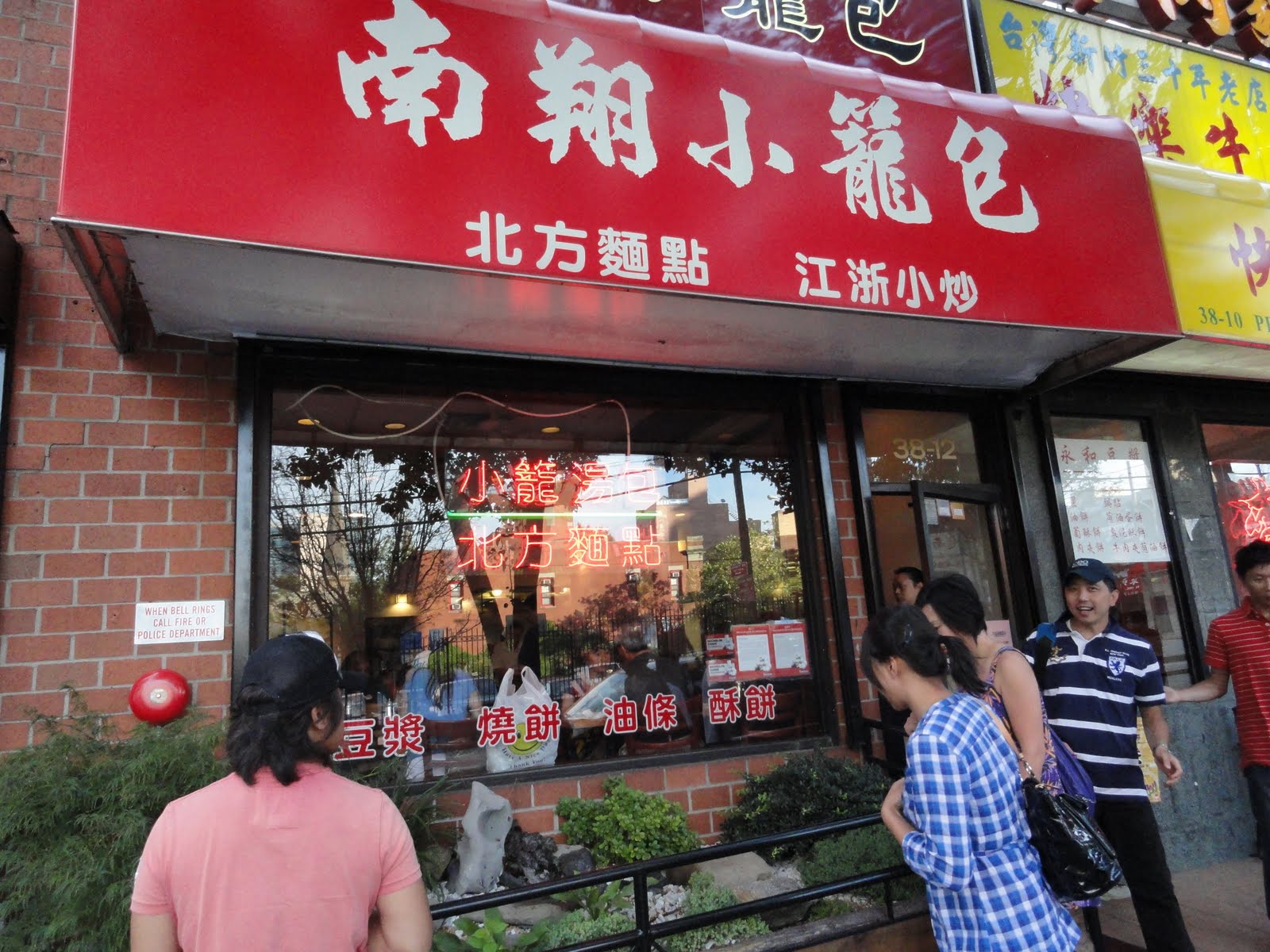
There is no doubt that New York is the most culturally diverse city in the world. There are many neighborhoods throughout the city that reflect the customs of the people who live there. Perhaps no community demonstrates this more clearly than the Chinese, who have established not 1, not 2, but THREE different China Towns throughout the five boroughs. Several weeks ago I had the pleasure of visiting Flushing, Queens, which has one of the China Towns. I went there for lunch with some friends after a day at the beach, and was able to enjoy some great authentic Chinese food.
Were not in Kansas anymore, Toto. No egg rolls here.

The particular restaurant we visited has been recommended by the Michelin Guide for the past few years (Note: I said recommended, not rated, as in stars). You know you're in an authentic place when you can't read anything and you are the only non-Asian people in the dining room. Thankfully, my friends had visited before and the menu had some translations.
We ordered several plates of food, all of which come at a very cheap price ($5 or less). This style of dining is called dim sum. It reminds me of tapas in Spain, where everything is appetizer portioned and meant to share. You are served hot tea to accompany your meal to aid in digestion instead of water (but you can have water if you like, as well). This first dish is pork dumplings. There's a ball of ground pork sitting inside this little liquid-filled pouch, which are then steamed. Tradition follows that you poke open the pouch to let the liquid flow out into your spoon to suck up. Otherwise, you risk burning your mouth with the steaming hot liquid if you just eat the whole thing in one bite. The dumplings were absolutely delicious. I could eat the whole basket, which brought 5 or 6 dumplings.
Up next were some rice cakes sauteed in a wok with some vegetables. They are gluten-based discs that have an incredibly soft and chewy texture.
Lastly were some scallion pancakes. These are non-leavened flatbreads made with dough instead of batter, like a traditional American breakfast pancake. The dough is mixed with green onions and cooked with oil. Although a savory item, they lacked a bit of seasoning. Nonetheless, they were an interesting treat.
I have the feeling this was just the tip of the iceberg as far as my musings into Chinese food are concerned. I will definitely check out some of the other China Towns to sample their authentic cuisine. And the best part is, it's so cheap!

Monday, August 9, 2010

The Best Pizza ever?

On a recent visit to Connecticut to visit a friend, he took me to a hole in the wall pizza joint named Frank Pepe's. It's existed since 1925 and has since had a couple of expansions. However, the original still stands with its coal-burning oven. You will know you arrived when you see the line of people outside waiting for a table. A line for pizza? This has good written all over it. I'm in.
The pizza was absolutely delicious. At first, I was hesitant to call it the best pizza I've ever had. That's a bold statement. It's definitely the best I've had in recent memory, which puts it into the tops I've ever had. I think the combination of the coal oven and fresh ingredients is what makes the pizza sing. I even liked their beverages, which included something called White Birch Beer Soda. It tasted kind of like a medicine, but somehow really good at the same time. I recommend it not only because it's good, but because you probably won't see it anywhere else!
If you live in the Northeast and ever pass near Connecticut, it's definitely something you should check out. You'll thank me later.
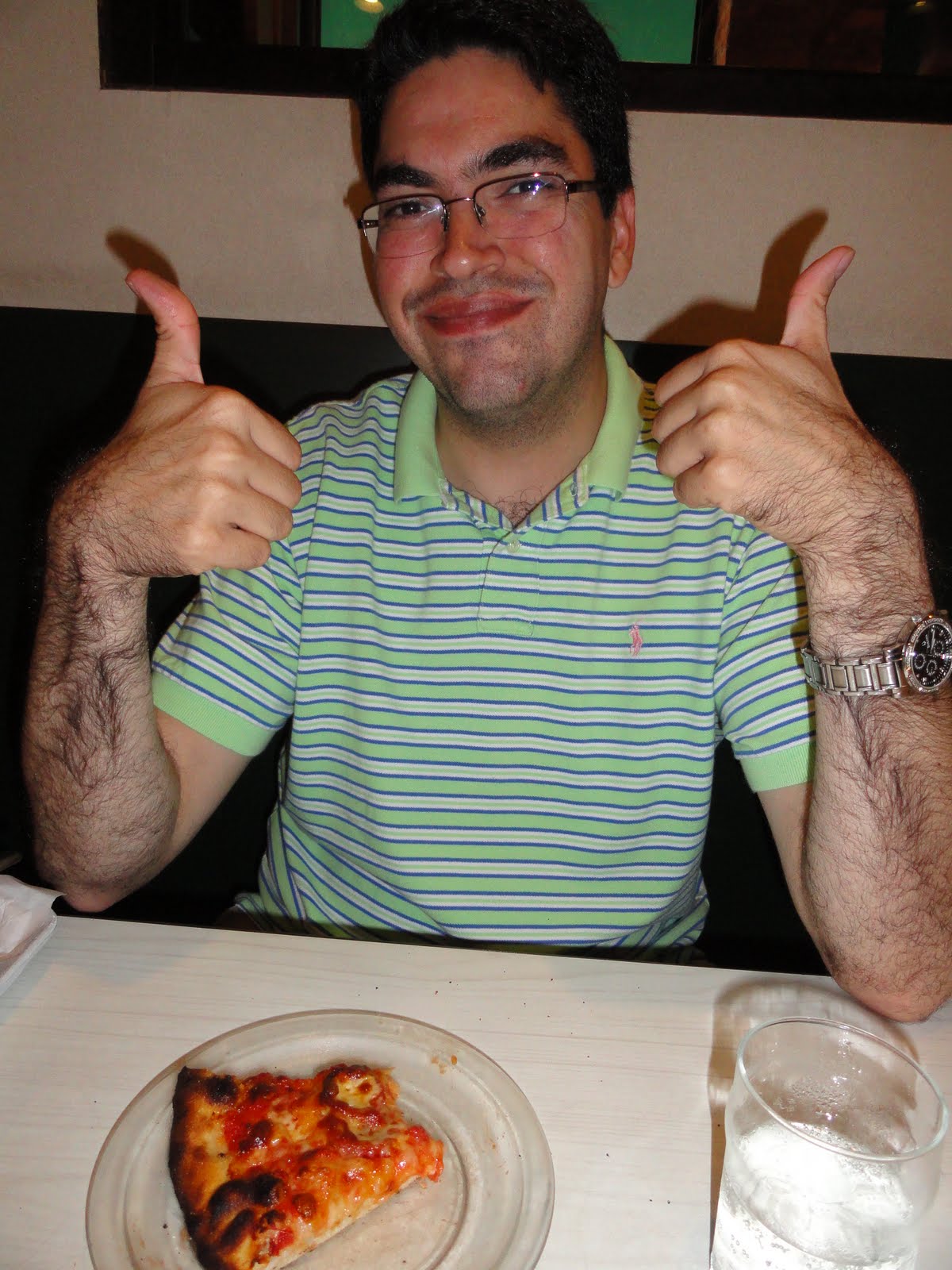
Albert gives his stamp of approval.


Momofuku You!


Momofuku (meaning "lucky peach") is a family of restaurants owned and operated by David Chang, a Korean-American chef that studied at the French Culinary Institute in New York. After graduation, he realized he did not have the financial backing or skill to create a multi-starred restaurant. So, he did something perhaps even more daring. He opened up a small place called Momofuku Noodle Bar in the Lower East Side of Manhattan, an area more known for its pubs and hipster NYU students than for its cuisine. However, because he was in a less picturesque neighborhood, his rent was low and he was able to afford great ingredients from local farms. The decor is minimalist and there is no dress code. Waiters don't even have uniforms. Due to all this, he is able to present you great food at an affordable price, compared to other "fine dining" places in the city. It's simple food prepared expertly.
Shortly after, he opened up his other places, including Ssam Bar, Ko, Milk Bar, and most recently Ma Peche. Ko, the most formal of his places, only has a dozen bar stools, and reservations are nearly impossible to get because you have to go through an online process to get the seat. The food is incredible though, and it has won awards for best new restaurant. I've had the privilege of visiting Noodle Bar twice and Ssam Bar once.


Chang is a big fanatic of pork, so vegetarians beware. His signature dish is his steamed pork belly buns. He takes a freshly made bun, and fills it with hoisin sauce, two slices of steamed pork belly, scallions, and cucumber. That's it. It's very simple, but the ingredients are so good and blend so well, that it is absolutely delicious. There is a perfect amount of fat on the belly that fills your mouth with a rich pork taste. The fat goes great with the sweet hoisin, and the textures of the bun and cucumbers go great. You can get the pork buns at just about any of his places.
His other signature dish (he's got several) is the pork ramen noodle bowl. It's a bowl filled with freshly made noodles, pork shoulder, pork belly, scallions, a poached egg, fish cake, bamboo shoots, nori (sushi wrapping), and a flavorful broth. This is one of the best soups you will ever have, and it is incredibly filling. This dish is only available at Noodle Bar, I believe.
At Ssam bar, I enjoyed Crispy Pig's Ears, Pork Shoulder Steak, and Spicy Pork Sausage. I didn't have my camera with me then, so there are no pictures. But they were delicious! He changes the menu weekly, so these dishes are either no longer on there, or have been altered slightly.


Chang is also famous for two other gastronomic feats. At Noodle Bar, you can reserve a fried chicken meal, while at Ssam Bar you can reserve a "Bo Ssam," a whole 10 pound pork shoulder served alongside oysters and other accompaniments. I was able to try the chicken meal with some friends this past weekend and it was phenomenal.
You are given two chickens, one served Southern style with old bay batter, and the other served Korean style in a spicy glaze. 
To accompany the chicken are 4 sauces, an herb basket which included purple bay leaf, bibb lettuce, peppermint, baby carrots, red ball radishes, and a few other things I didn't catch. The sauces included a hoisin, soy-jalapeno-garlic, the spicy red sauce, and another I can't recall right now. Not pictured are mushu pancakes, which are flour-based tortillas. You would take some chicken, herbs, and sauce and wrap them with the pancake and enjoy. 

The herbs, sauces, and vegetables were so fresh and well made that you could taste each component as you bit into the wrap. It was fun to compose each wrap differently than the previous to taste new things. Everything was delicious and the five of us were able to finish the platter. 

I highly recommend any of the Momofukus if you're ever around the Manhattan East Side and in the mood for some delicious, filling, and affordable food.